
Regrets and Soft Spots
After Work, Part 4

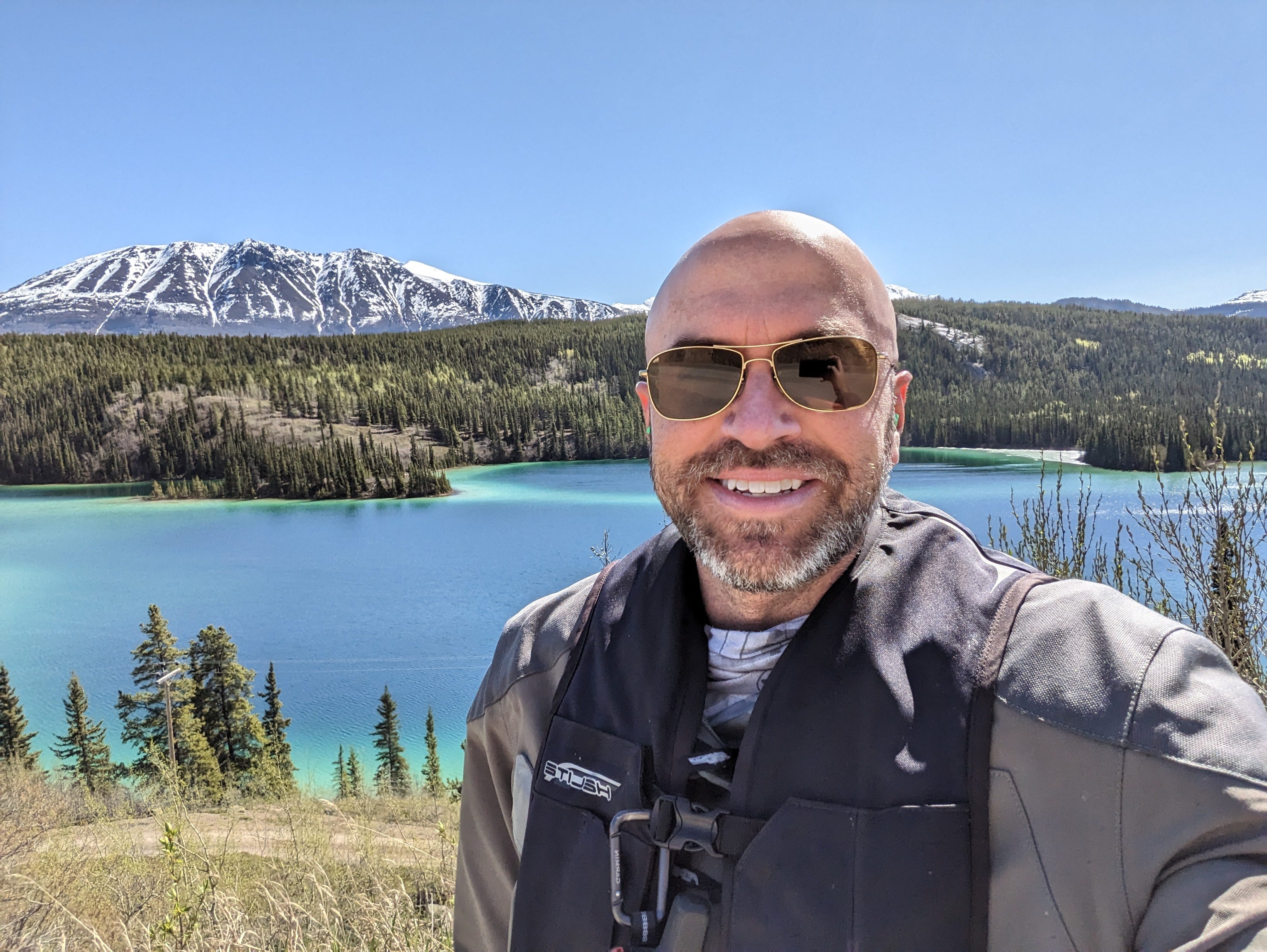
“Do you have any regrets about leaving?”
My friend (N.F.) asked me recently.
I tend to have few regrets about life generally. I am a big believer in the idea that we always do the best we can with the information we have at the time. We can learn lessons from the decisions we’ve made and apply them to our future, but wishing we had done something differently in the past is a slippery slope: Judging your past self’s actions with your current self’s information is disrespectful to your past self! We also can’t be certain what might’ve happened down that road not taken; if you pull on your loose threads, you risk unraveling the entire Tapestry of your life. (credit: Star Trek TNG)
But I’ll be intellectually honest and share the two times I can recall pangs of career-related regret:
I always thought I’d try living abroad at some point, but I never took advantage of those opportunities when they popped up. The timing never felt right, and I just assumed “I can do it sometime later,” but… life happened. Health, pets, relationships. I could still do this, sure, but my priorities have changed. Proximity to family has grown in importance as people have aged, especially with the death of my dad1. And, my soul friendships and familiar, restorative locations have felt more crucial to living a life that feels good. There’s a lesson here: sometimes it’s not your ability to do something that goes away, but that your interests and priorities might change so that you no longer desire to. Aging doesn’t always lead to a crisis of ability — sometimes it’s a crisis of inspiration.2
“If I don't do it now, the chances that I will ever do it just get less and less.”
—Moto Nomad Sinje Gottwald
There were opportunities that I didn’t take advantage of that might have been easier in my previous life, that might make this current life a little more robust. Travel opportunities, meeting different types of people, speaking engagements, building a public profile, etc. But I always felt like it was a better use of my time to focus on my little New York life and to use any extra time to master my craft inside the job that I already had — which led to me being able to do what I’m doing now — but I sometimes think I should’ve done more of these things when I had the chance. For example, I spend a lot of time writing these days, and my audience is small; I can’t help but wonder if I had spent more time becoming a bit more of a public personality during my career era, I might be having more reach and more impact today. (It’s not impossible to do that now, of course, but it’s more difficult!)
As I said in a previous section, it’s cliché, but it’s true that “later never comes” — the “I’ll get around to that some day” really does sometimes slip away before you know it.
I guess I expected to have more, but that’s really the extent of it. I’m happy because it’s a short list, and it’s not something I spend much time thinking about. However, the conversation didn’t end there…
Soft Spots
A more powerful question was his follow-up: “Do you miss anything about the working life?” Early on, I would have given an unequivocal no, but now the answer is yes.
Leadership
The first (confusing) glimmer of Yes popped up while waiting for a flight at LAX. As much as I used to despise business travel (including a severe air travel phobia that kept me grounded in my early 30s3), I sometimes miss it now. (?!) Sitting there waiting to fly across the country, I found myself gazing with envy at the corporate travelers with their TravelPro luggage and Versatile Crease-Free Blazers. I, inexplicably (god this is horrible to write), miss being one of them. I never, ever thought I’d say that. [vomit emoji] But there was just something about that lifestyle that fit me. (See “neuronal tree” in the next section!)
More broadly, I miss being in a leadership role. I was fortunate to get to do the job that I did; I think I was reasonably good at it, and I hope that I mostly used the role for good. The best parts of that job were when I could make a difference in someone’s life — whether by giving them an opportunity, believing in them, sharing a story, or just showing up. It was a privilege to be able to do that for so long, to help others in doing meaningful work, and to go on the journey alongside them — sharing parts of their stories. It was nice doing work that mattered, and feeling like my unique contribution made a difference.
But, I've also accepted that the only way I was ever able to succeed at a big job was to do it all-in — that herding dog with a big flock4 and no fence. But “do it completely or not at all” runs a shepherd ragged. So, now it’s about learning to be content without a herd, and while there’s a broad spectrum between bored dog on the couch and frazzled dog never getting a break, I was never able to find a place of homeostasis in between. I tried for years. When I think about setting boundaries that would allow for a more balanced life, those boundaries appear to eliminate all of the things I was really good at. I haven’t given up on this for the future, but I don’t have any solutions at the moment. (To be fair, this era of life has also given me a wonderful reprieve from having to constantly think about this problem!) For now, the risk of going back into the fray at the expense of everything else feels like a live wire that is best avoided. Although, one of my lifelong mentors (P.K.) recently asked me if I would ever consider having a big job again. I shocked myself with an instant Yes. He said he was glad to hear it. Maybe I’m not “done” after all?
Integration
Despite objectively having a life that contains a whole lot when I zoom out, I find it hard to hold on to my larger story. Wait But Why illustrates this concept well in this article. When I pause to look back (which I’m doing right now just by writing this) at the many things I’ve done, learned, and experienced, it seems great — it’s something I would’ve designed for myself in advance, and would again. But in my day-to-day lived life, I don’t sit here feeling like some warm, whole, ultimate embodiment of all those experiences; I just feel like a guy having a slow day in the woods typing an article that I’m not sure anyone is ever going to read. As my various therapists have told me over the years, though, “what you seem to expect to feel about the human experience is not achievable. Nobody can sit there holding on consistently to the entire embodiment of their life story!”) I read recently about the concept of “autobiographical memory,” and maybe mine just … isn’t very good. I don’t know.
My therapist gave me a great analogy for living this kind of life: if you’re sailing around the world, sometimes the wind doesn’t blow. And when the wind isn’t blowing, you don’t sit there worrying or racking your brain; you do other tasks on the boat. So I think there is something about finding a way to keep doing “work” — whatever my version of “work” is now — when my wind isn’t blowing, trusting that it will indeed blow again.
It also helps to have a functional home port. You can live on your boat (as she put it, “you’re not a bug”), but living somewhere when you’re not off exploring makes sense and is… normal! (who knew?) Fully disconnecting from everything seemed necessary to experience the maximum “blank page freedom” that I was yearning for at the time; some of the allure of being on the road was the sense that you could keep the journey going on forever if you wanted to. But doing this taught me that I (and most of us, probably) need to come from somewhere, and that that place needs to have reliable systems for connection/community/friends/family (and fitness and rest!) This was a hard lesson to learn; binary thinking had me in this false choice of either a life of maximum adventure or of maximum connection. You *can* have elements of both in your life (see: polarity management in the previous section). If you have a part of your life that is high variety and disconnected, it helps to pair it with connection and routine.
Connection
As I mentioned in Part 2, it’s challenging to be out of sync with the normal cadence of the world. 4000 Weeks has a chapter about the difficulties of being a digital nomad, and his point is spot-on. Living nontraditional lives, whether through extremely flexible schedules, heavy travel, or living alone in a rural location, can rob us of the connections that naturally arise from being in the rhythm of society. I expected something like this to happen, but I didn’t expect to be so wrecked by it. There is a creeping and cumulative loneliness in this type of life (evidenced by the numerous NYT articles post-COVID about people who left the city for the rural life, many of whom are now slowly returning), and despite trying to prioritize social contact when opportunities arise, it almost feels like a melody without harmony, if that makes sense. There’s a subtle, background human flow that is given by “normality,” and you don’t realize that’s a Thing until it’s missing. I’m still working on this; I’m really not sure how to gain those things back without going so far that I get stuck again. [2025 Note: After my dad died, my pull toward a more settled, slow, and simple life went into high gear — it’s unclear how much of this is related to grief & recovery, or how much was happening anyway.]
Despite these regrets and soft spots, I’m still happy with my decision to go through the door. And it was the hardest thing I’ve ever done5. I’ve made dozens of difficult decisions in my life, but usually they were fairly time-boxed. This decision took years. But it was 100% worth it. I will never again have to wonder, “What could have been, if only I had the courage to try?” And I think going through the door would have still been a great decision even if things hadn’t worked out, just to have been able to put that question to bed. (Of course, as I said before, there’s no way to know what that other road would’ve had on it!)
I mentioned above the false choice of maximum freedom vs maximum normal. But what does the in-between actually look like? Join me for Part 5, Seeking the Middle.
This was a 2025 edit; originally this referred to parental health struggles.
[12/28/25 Edit: I just discovered a similar quote from Margaret Atwood in Cat’s Eye that goes, “There's not much time left, for us to become what we once intended. Jon had potential, but it's not a word that can be used comfortably any more. Potential has a shelf-life.” Indeed.
I can write about this more at some point, but tldr the book “Flying with Confidence” was life-changing if this is something you struggle with!
I don’t like the “sheep” metaphor, as I think it is anathema to servant leadership. I’m not sure what else herding dogs herd, though.
I almost removed this on edit, considering the context of my life in 2025. I need more time to reflect on whether it’s still true. But it was true at the time!
I really like the sailboat analogy
Great read, Daryll. I'm still shocked by the irrelevance I feel in the world without a corporate role and identity. But I can't say that people were all that interested in hearing about my job anyway, so where does this feeling come from? Anyone who truly understands what work travel is like would never be impressed by it, so surely this corporate identity must be an illusion after all.
I can't say I would ever answer yes to the question of going back to a big job and I wonder if that will ever change - looking forward to hearing your thoughts about the middle ground.