
Interlude
After Work, Part 8

Most of what you’ve read so far in this series was written before my dad’s tragic death last summer. If you’ve been with me for a while, you’ll have seen my Sojourn into Grief and the reorientation that flowed from it. As I’ve been editing these older writings and recording the voiceovers, I’ve noticed a tonal shift versus what I’ve been working on more recently. I’m not sure if it’s subtle and only perceivable to me or will also be notable to you, but in case it is, I thought it was worth a mention before we continue.
When I began writing about these post-working topics (and as the content grew from a single post to a multipart series), a clean plan for what I wanted to say emerged: Start with why I departed, explain the difficulty that went into it, show the process of overcoming it and what happened after, any regrets & lessons learned, and how to integrate those lessons into life — and, ultimately, what would come next.
Not only has that flow become muddier, but I’m having a lot of trouble with that “what comes next” part, because … I honestly don’t know what comes next. I don’t mean that in a “predicting the future” way, but more like, whatever plan I had for exploring, “structurally figuring out life,” and methodically explaining it all, just isn’t how I am actually living these days. Is this still a series about sunsetting a career — which, somehow, terrifyingly happened almost *four years ago* now — or is it more about what happens when your life explodes in several different ways at the same time? (When does a book move from the Business section to the Self Help section to the Biography section?)
The wise advice for lost writers is that if you are not sure what you’re writing about, just write about being lost. So I guess that’s what this is, as I contemplate today — the Day of the Dead (although you’re definitely reading this some time later).
My life has become simpler, my mind uncharacteristically quieter, my voice softer, and I’m (mostly) OK with all of it. I was very much inspired by my friend Gena Chieco‘s idea of having a “big little life”:
Last but not least, I continued a morning ritual of reading on my balcony with Finn, surrounded by birdsong. My evening ritual of sunset beach walks offered a serene bookend. I have intentionally created a big little life, with purposeful work and ample space for the arts, nature, fitness, community, creativity, travel, and other things that richly feed my spirit—I am infinitely grateful! It is by taking the smallest of steps toward the life we yearn to live, that we begin embodying the one we were born to lead.
I’ve made peace with the fact that most of the things on my trusty Life List were definitely below the line-of-imperative, and as I transition into my late 40s, the simple things are what seem to give me the most consistent joy: my morning coffees in little cafes or in my cabin in the woods, hanging out with dogs, reading fiction1, going to my weird gyms, watching the birds at my feeders, walking around the city, and laughs with family and friends. There are a few big trips I still want to take that I haven’t figured out how to slot in (neither logically nor emotionally), and I’m scheming to write a book, and I really enjoy the coaching/advising work I do from time to time and would like to do more of that. I still haven’t solved relationships (who has?), but otherwise, I am oddly (for me) fairly content.
I still get the occasional pangs of “omg you’re not maximizing your life!”, but Oliver Burkeman (of 4000 Weeks) whispers in my ear that that’s not the goal anyway, and such reminders are comforting. I’ve accepted that my body needs more rest than it did when I was younger, and that mental fatigue creates physical fatigue, and that when I zoom out, a ton of stuff happened in the last few years, for better and for worse. I don’t worry too much about my identity, knowing that the wheel will turn as I find more recovery from the hard things, and gain more skill & experience in the aspirational things.
I feel the painful stabs, too, telling me “the world is fucked up and you aren’t using your skills and resources enough to fix it,” but as my friend Marianna Lopez recently wrote, “I am not responsible for the pain of this world.” I dedicate as much time to the things I care about as my energy allows, and there’s no sense beating myself up over the fact that my energy well isn’t infinitely deep anymore. (also, it never was...) I still have passion, but I don’t get as worked up over things that I have no ability to change. The world does feel fucked, but I can’t fix it alone, and so I think the best thing I can do is take care of myself, enjoy life as best as I can, work at the pace I can muster, and not judge my actions as being too slow or insufficient. Maybe these are the first hints of becoming one of those Elders that I used to envy early in my career: I was so full of drive and frazzle, yet they always, eminently made the huge decisions with calm, and somehow still made others feel good about themselves along the way.
Or maybe Elders only look like Elders from the perspective of youth. If I am indeed on my way to becoming one, I can say for certain that they’re just as much of a mess as the rest of us.
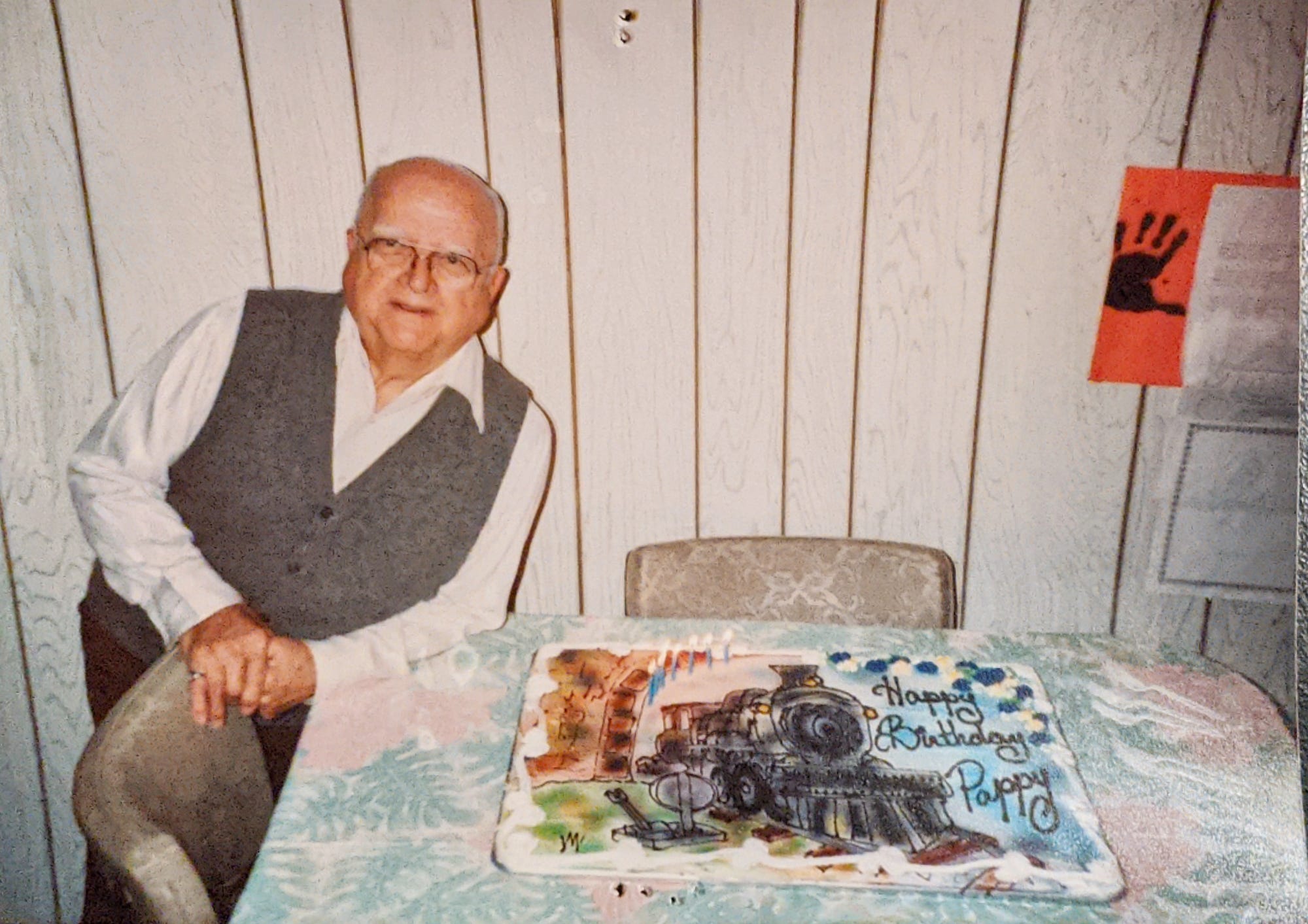
Years ago, when my grandfather Leroy (Pappy to me) died at the ripe old age of 102 (Take note, people that I annoy! I’m gonna be here for a while!), the pastor (K.P.) from my childhood came back to town to perform the service. Spending many formative years listening to him on Sunday mornings (and being told I had to sit quietly and pay attention, even though I had no idea what was going on) permanently primed my brain to assign a lot of importance to anything I hear spoken in his unique, soothing voice.
He left us with four takeaways in the service:
Just imagine all of the things he got to see as the world changed so dramatically over an entire century.
But imagine how quickly that time actually passed to someone, as they consider their life at the end. From an internal perspective, even a century of life goes by in the blink of an eye.
When we think about such a long life, in the end it’s never about fame or fortune or possessions, but about the people you knew and touched — and who touched you.
Your time is coming too, faster than you think, so get your shit together. (ok, he didn’t actually use the word “shit”) While he meant it in terms of getting straight with your faith, I took it as: ruthlessly edit your life, do the things you actually want to do, clarify your values, and live true to them.
I often think back to this when I’m feeling lost — about the passage of time, about whether I’m actually doing the things I want to be doing, and about the people I’m spending it with. Perhaps this is one of the higher purposes of loss, and why we value end-of-life rituals so much: they’re not only to honor the dead, but to checkpoint us, to remind us to live fully, with awareness, and not on autopilot.
As I was reflecting on these lessons, it struck me how much they still resonate, yet my interpretation of them is quite different than when I first heard them in 2018. Back then, it felt like an urgent call to courage and action: Life is short, and you aren’t happy with what you’re doing, so you’d better do something else before you run out of time! Now, though, it feels more like a call to treasure. Treasure the times with the people and the places you enjoy. Stop the spin on things you can’t change, and the worries about things you don’t really want to do anyway. Enjoy being yourself, and be yourself fully. And, sure, don’t forget to do those things that you want to do, but if you don’t, it’s not the end of the world, either. “Get your shit together” can also mean, stop pushing for the huge stuff and the extremes. Realize that you like watching the birds and reading fiction, and those aren’t “wastes of precious time.” And that mastery doesn’t have to mean ruthless pursuit of betterment.
So that’s where I’m at, here toward the end of 2025. I still have more to say, but in this quieter, calmer place, I think the last few posts of this series will be a bit more of a meander…
Reading fiction seems to be quite diagnostic for “Are you in a life maximization trap?” For years I read none, because it seemed like it wasn’t a productive use of time. Of course, I was watching plenty of YouTube and aimlessly coping-scrolling, which wasn’t remotely productive either, but picking up a fiction book felt like an intentional commitment to something frivolous! And now, I love it again. What’s your relationship to reading fiction?
(If you’re looking for a jump start & easy and fun read — but that still feels like a “real book” — I recommend Project Hail Mary!)
I wish you could have seen the surprise on my face to read my name here and my smile as I write now. Thank you...!
And I also want to say: not all who wander all lost. I believe every human needs more "wanderment" and wonderment in their lives. Not everyone will get the chance, the space or has the capacity to explore their inner realms, to begin again, to let go of self-imposed bull-shit responsibilities, to actually explore who they really are underneath the mirage of illusions, and yet you have been given that gift and you worked hard for it too! So yeah take it, create for the sake of creating, come alive within yourself and for yourself, and fuck the rest. The world can take care of itself, it has before you arrived and it will continue to after you die. What matters is the experiences you want to have before your time here is over. How much love you actually allowed yourself to receive, joy, pleasure not what you did for others or if its at par to societal approval. Becoming the microcosm of the world you want to see, focusing on living from that place, figuring out what that looks like for you and only you, creating from that place, loosing yourself to that presence, that my friend is what its all about. (in my humble opinion, of course) Love you!
Daryll, I am so honored to be mentioned among your powerful and beautiful reflections, and touched that "big little life" resonates with you. Thank you.
We are so conditioned to strive for more, faster, bigger, better—constantly pulling us away from the present moment, from our essence—that to embrace simplicity, solitude, spaciousness, and stillness feels like a kind of rebellion!
Even the healing journey can be churned through an egoistic, late-stage capitalistic lens—the need to do more, "fix" ourselves, buy things, be "productive." Churn, grind, hustle. Rinse, repeat.
But what if simply *to be* is the ultimate state, the mecca, the alpha and omega, the gift waiting to be unwrapped within us all. To reach a place of stillness and peace while the world spins, knowing we are inherently, absolutely, fully enough in our mere existence as soul in a human body navigating this messy thing called life.