
Rethinking "Returning"
After Work, Part 15

Years ago, I benefited from some great coaching1 where I discovered that I had been subconsciously closing off certain courses of action in order to avoid pain. It was shocking to my introspective self that such a thing could be going on without me being aware of it! Such things tend to reside in the body more than the mind, and since then, I’ve tried to remember to tune into that unfamiliar language whenever something doesn’t feel quite right.
As I mentioned in the last piece, I’ve been having one of those “doesn’t feel quite right” sensations about the topic of “work,” although in this case it’s far from subtle: there’s an intense danger signal there, which I know is cutting certain paths off from consideration. (It says things like, “Feel free to write all day, but definitely don’t entertain anything that might require more commitment!”) While it’s not at all urgent (I’m enjoying what I’m doing and have plenty of things to explore; I’m not looking for a “job”), I don’t like paths being blocked for messy, tangled, fear-based reasons.
When I struggled with that “fear of an exit” years ago, it helped to chip away at its component parts; I want to do something similar here, not so much to demystify it, but more to answer the question, “What would make the scary routes feel safe?” What would it take to break through that threshold — to venture to higher altitudes, to slide the intensity scale back up a little bit? To go beyond paddling around in the river valley, beyond teaching climbing classes, beyond the long walks by the lake, beyond resting in the cabin?
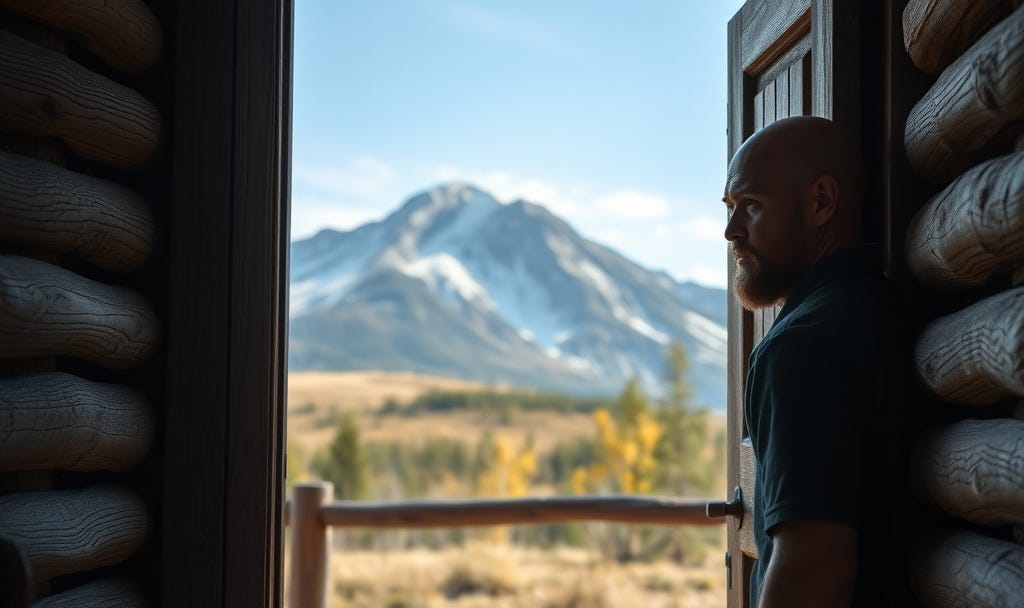
First (and in spite of the title of this piece), we need to let go of terms like “returning” or “going back.” They do not serve us; just as that high-gravity, binary “omg a forever retirement!” did not serve, “omg maybe un-retiring!” also does not serve. We’re allowed to go on another expedition if we feel like it, and it doesn’t have to carry some huge, symbolic meaning. It’s also not binary! There are infinite gradations between “I’m hibernating in this cabin” and “I’m summiting Everest” (as between “I’m reading fiction by the fire” and “I got a job as a CEO.”) Where on that scale does “climbing” — or, “working” — actually begin, anyway? Is it when you’ve ascended exactly 546 feet? 5000? Is it when you have one paid coaching client? Or 12? What if you’re doing unpaid nonprofit work for 2 hours a week; is that “work”? What about 38 hours? What if it’s paid, but only for 10 hours? What about a long river expedition with no elevation gain? Spending hundreds of hours writing a Substack? You’re allowed to pick whichever gradation is appropriate for this time in your life, your energy level, your interest level, and your other responsibilities.2
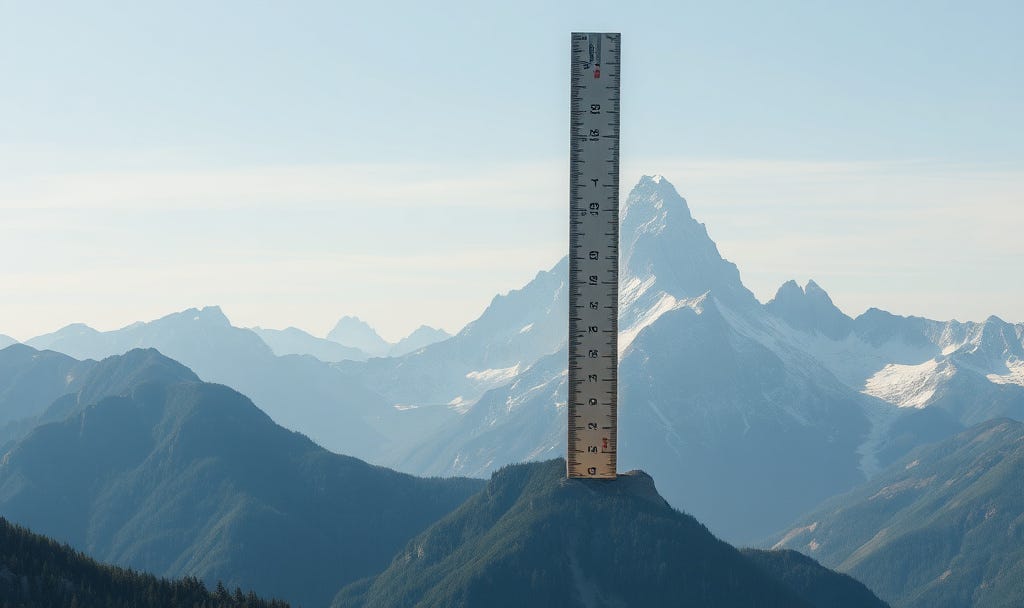
Second, we need to feel ready enough to leave the valley. This might be a matter of having sufficiently recovered from the last expedition or of finishing your exploration of the valley-specific activities you needed — not just its respites, but its stimuli: nature, awe, love, whatever. The tricky thing about this one isn’t so much, “What specifically can I do to get ready faster?” but more that … you sort of can’t. You’ll do what you need to do there until you don’t need to anymore.
It’s easy to self-judge, thinking that perhaps you’re spending “too much” time there or that you need “too much” rest or recovery — but how much is “too much,” really? If you just did something crazy intense for two weeks, nobody would question your need to chill out for a week. Scale that up: What if 20 years of frazzle needs 10 years of recovery?! (One of the reasons these timescales are scary is because if your blocks are decades-long, you don’t get too many of them in a lifetime. Per Burkeman’s assertion in 4000 Weeks — that we are desperate to avoid noticing our finitude — not wanting to tarry in recovery for “too long” makes perfect psychological sense.)
While it’s a valid concern to be on the lookout for mistaking rest for sloth (there’s some rule of thumb where if you’ve “rested” and still feel tired, you might actually need activity because you’ve entered a slothy state), in my experience, this isn’t something that people who are normally active/action-biased should be too worried about. Sloth is anathema to expedition personalities; if you’re starting to get slothy, that feeling alone will probably motivate you to think about a departure! (“I’m tired of being here and it’s time to make a change.”)
What’s much more likely than sloth is impatience: wanting our state to change before it’s ready to change. We’ve all had illnesses or injuries where we pushed too hard too early, feeling like we were recovered but actually weren’t. (It’s always that first too-big meal after a stomach virus!) Some latent healing might still be happening that we aren’t even aware of, so rather than beating ourselves up about feeling unmotivated or “lazy,” consider a deeper self-interview: is there something that might still be ailing that’s asking you for more time? Our body has deep wisdom about itself, whether we acknowledge it or not…
If a memorable role model would help, this morning I overheard someone saying that Daniel Day-Lewis takes years-long breaks between roles — that to be able to do what he does, such gaps fill several needs for him (click the link!). Sounds like he’s a follower of that expedition mindset. Viewing things as I suggested in Part 12 — as diverse by design — can give us better context for our climbs, with the knowledge that we’ll descend again when we’re ready to, perhaps to the same valley, perhaps to another, that we’ll tarry there as long as we need to so that the next thing can emerge. (and it will!) Maintaining the right “zoom level” on your life — to trust that you will continue to occupy each of these important states at different times — may be the lynchpin skill to hone. (I.e., if you deeply love two places, whether the mountain & the valley or New York & LA, holding on to your broader story when you’re living in the narrower moments of each one is something you have to keep cultivating. See this Wait But Why piece that I linked previously.)
Note that above I said “ready enough,” not “ready completely.” This is where that living experientially (vs. living theoretically) idea reappears: while sometimes we overdo it and try to use our sprained ankle before it’s fully healed & end up prolonging the injury, we can also believe something is still injured that actually isn’t. Venturing out a bit (remember our infinite gradations from above!) to test out how things feel in practice might be just what the doctor ordered.3 Another flavor of this is when we’ve understood the lessons from our last expedition but need to set off again to fully integrate them. E.g., if you realize that you suffered a workaholic burnout last time, formulating strategies to prevent it in the future is good, but you won’t know if those strategies work until you try again!
Third, you need to honor that the you of today isn’t the same person that made your last climb. Age, experience, life … all lead to us to constantly becoming someone new, so be nice to that person rather than lamenting the loss of the you that dwells in the past. I used to love heavy weightlifting, but as I got older, despite technique refinements, professional coaching, and PT, certain lifts kept leading to injury. As I was doing this for fun & health, not for competition, I finally decided to just stop doing them. But I didn’t stop going to the gym, I just subbed in other things! So it might just be that unsupported, dangerous, months-long climbs (perhaps all-consuming, mentally intense, high-travel jobs) aren’t right for this version of me, and that’s perfectly OK. There are countless ways to configure an expedition or to make a leadership contribution. “Don’t give up; adjust” as A.S. regularly reminds me when I’m freaking out in the middle of a pursuit.
Those adjustments don’t necessarily need to be forever, either! The you of today is going to change again, too; our states aren’t permanent. The neuroscientist Ann-Laure Le Cunff posted recently about Potential versus Capacity and how getting them confused can be a source of burnout and overwhelm. Reading that, I realized I don’t differentiate them at all; everything is always about potential! “I could do this, I should be able to do this, I’ve wanted to do this, I want to have done this…” yet never “Right now, I’m able to do this.” That gap between what I could theoretically do and what I can actually do does indeed lead to a whole lot of self-berating, self-judgment, and self-disappointment.
Finally, while there are plenty of valid reasons to go on an expedition — and hopefully we agree that it’s allowable to simply enjoy climbing and/or that the expedition life may just be congruent to the shape of one’s neuronal tree, and that self-determination means we can do whatever we want to with our lives anyway, and that morality means that we should do so ethically — choosing which mountain is important, too.
Even if you love something, you won’t be motivated to do it if the circumstances are dumb; the route we choose needs to be meaningful. If you adore climbing for the scenic vistas, a route that never gets above the tree line might not be interesting to you (or if you love it for exercise purposes, maybe a flat route feels boring). My motorcycling career has had many iterations over the decades, each meaningful to me in a new way: originally the “go out for a ride” phase, exploring the region & often repeating roads I’d enjoyed before; between the pure exhilaration and the experiments with various bikes and gear, I enjoyed it just for the sake of it. Later it shifted to something more utilitarian — a peculiar & fun source of transportation when I didn’t have a car, but eventually the hassle of weather & carrying capacity and having a dog made it less workable. In recent years, I’ve preferred longer expeditions and enjoyed them immensely, but having done several of them now, I can feel another shift slowly starting to form.
Meaning can be all sorts of things, whether for deeply personal reasons, pursuit of mastery, a call to service, or something else. I really enjoyed this episode of a Slight Change of Plans with Jennifer Wallace, including a great discussion of the nuance between meaning and purpose. It’s worth a listen. But if you’re struggling to find yours, consider this:
Who is that one person, organization, opportunity, or cause that, if they called, you’d drop everything for? (as in one of my favorite scenes from The West Wing) I can quickly conjure half a dozen obvious ones for myself. The fact that I’m able to imagine such things so easily makes me wonder: is this fear of climbing really a fear, or is it that I just haven’t found something that gets me close to that Ikigai that I am seeking? Maybe I have it all backwards: perhaps it’s not about eliminating fear in order to be open to new opportunities, but instead, finding opportunities that motivate me to set the fear aside.
If you can’t even imagine any person/opportunity whose call you’d be excited to take, there might be something deeper going on. I was struck by Alessandra Biaggi’s recent Instagram reel [apparently this link only works on mobile; it’s the one from 27 Jan 2026] about the spiritual crisis she experienced toward the end of her time in the NY State Senate, which she described as disconnection from the meaning of her work. This made me think about my situation at the end — how I still enjoyed some of what I was doing and how I could squint & somewhat chart a path from my contribution to meaning, but it was growing more and more disconnected. While some of that was circumstantial (my contribution not being sufficiently unique & attributable to the mission I cared about, plus the issues with opportunity cost), her reel makes me wonder if I would’ve still struggled with meaning even if all of the logistical factors were in order.
I was just about to write a whole thing about how I’m not sure if I was truly in a spiritual crisis or what I did about it, or what to recommend, but, you know what? I think the answer to that question can be found if you go back to the beginning of this whole Substack and reread it as an answer to that question. (For some reason, this reminds me of one of my favorite short stories.)
As I was writing the above, I tried to keep in mind the oft-recommended tactic of “when you’re feeling stuck, talk to yourself the way you would talk to a dear friend.” Perhaps if I created (and followed) my own template, something would lift or lighten. So … did it?
Well, somewhat. I’m still left with many questions: Is there more healing to be done in the valley that I haven’t acknowledged? Am I holding on to an old version of me? Have I just not found the right Ikigai constellation of meaning to be motivated to action?
I was about to end here, leaving such inquiries in the ether for ponderance, but an unexpected conversation about fear with my good friend E.I gave me pause. I’d asserted that humans have powerful evolutionary leanings toward safety and security and that overriding them can take an equally powerful alternative. She challenged this — that not everyone experiences such things with equal intensity and that such a broad statement wasn’t appropriate: for example, what about daredevils? Or members of the Explorers Club — those who’ve pushed the limits of human performance and mankind’s exploration of the planet and universe, despite the difficulty and danger? It reminded me of being in the middle of the Brooks Range in Alaska, far north of the Arctic Circle, on my way to the farthest northern point one could ride to … and being overcome with this sense of I know why we do these things. I know why we go to the moon.
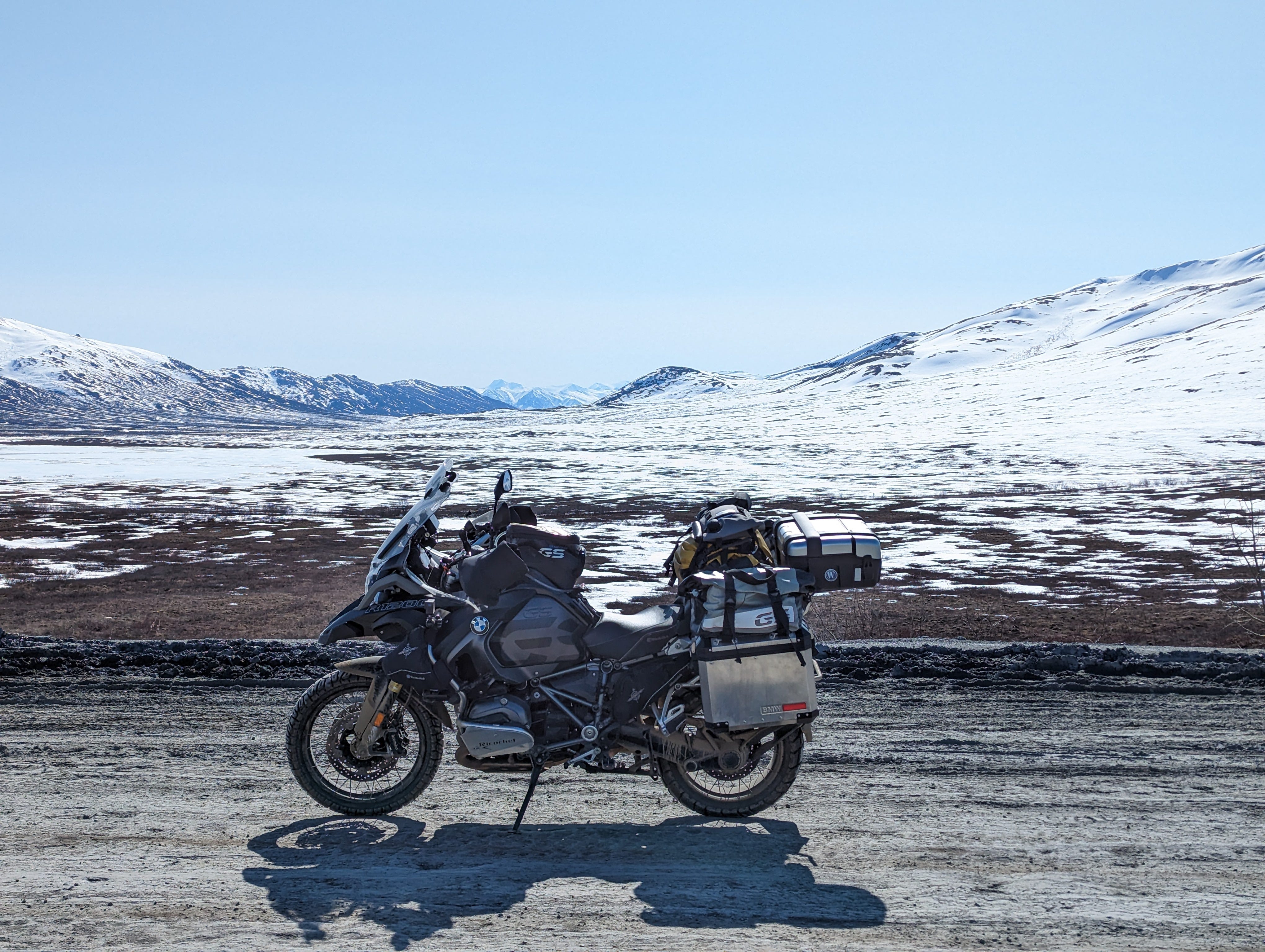
Days later, I came across this perfect article in The Atlantic about the Hero’s Journey, why we are naturally drawn to these stories, and how the idea of adventure is beneficial. Of course, deep down I know this intuitively: such things have gotten me over the hump of many tough times before (including that “last step is a doozy” conquering of my 2010 flying phobia). It reminded me, too, of the final scenes of Himalayan Hero, a moto documentary from (one of my favs) Adam Riemann, where he put words to it beautifully: that going on an expedition — especially when you’re stuck — can get you un-stuck. It puts things in perspective. Clarifies your priorities. Connects you to the most amazing, like-minded people. Ann-Laur Le Cunff writes a concurring point: the way through stuckness isn't by brute force or demanding focus when it’s not forthcoming. Sometimes, you just need to do something else.4
I was joking with someone earlier that I should probably just delete this whole piece and replace it with just one line:
Fuck it. Just get out there.
Next week, the last piece (for now) in the series!
From Linda Furness
There may be exceptions to this; if you’ve recently “left” and the jarring force of sudden freedom & lack of routine or perceived lack of safety by losing your brand, etc. is too much to bear, or that being outside the rhythm of society was too weird, or that the necessary meandering period after coming down the mountain was too agonizing, the “now what?!” terror can sometimes be briefly alleviated by getting a new job, it’s true. But it might be a shame to not find out what’s on the other side of all that for you. That said, who am I to judge someone’s capacity for agony?
A bouldering teacher once told me that certain tendon injuries don’t heal with rest, because without use, the area won’t get sufficient blood flow; the best way to recover in these cases might be light activity!
If I’m going to mention the Hero’s Journey, I would be remiss to not also include this other piece about the less-discussed last step: dealing with what comes after you get back home and having to confront the world.